Before a seed round, a cap table should show every security that can become equity — founder shares with vesting, the employee option pool and its granted and available split, outstanding SAFEs and notes with caps and amounts, and any warrants, advisor grants, or promised-but-unissued shares — on a fully diluted basis, reconciled to actual stock plan records and share registry. Investors price the round off that table, and the difference between the table shown and the table true is the difference between a clean term sheet and a re-traded deal or a passed one. Diligence finds everything eventually; the cap table is where founders demonstrate they already knew. This article covers what belongs on it and the failure patterns investors see.
What Does Fully Diluted Actually Mean?
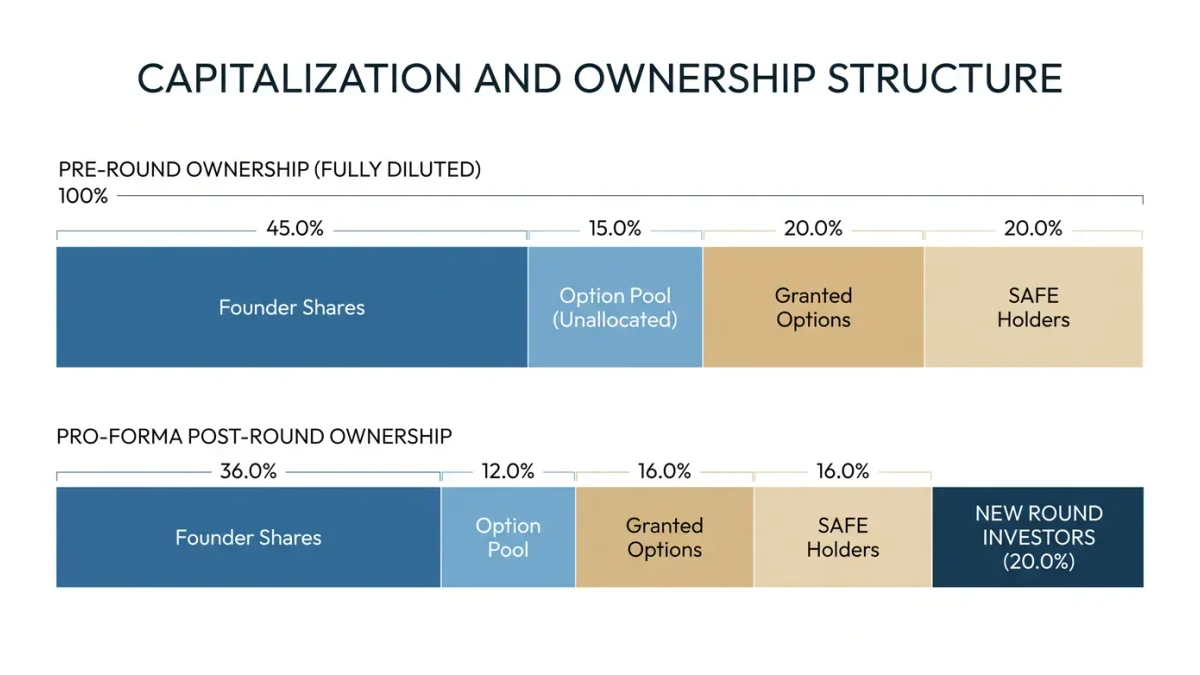
A fully diluted cap table assumes every right to shares is exercised and converted: issued shares, granted options (vested and unvested), the unallocated pool reserved under the equity plan, SAFEs and convertible notes at their conversion terms, and warrants. The distinction matters because investors calculate price per share and their ownership on fully diluted shares — a founder presenting only issued shares is presenting a smaller denominator, and the correction discovered at diligence reads as either sloppiness or concealment, both expensive. The table should also show the pro forma: what it looks like after the new money and after the SAFE stack converts, because that is the actual question on the table — what the founders will own after the deal everyone is negotiating.
What Are the Standard Diligence Failures?
Four patterns recur. Phantom promises: advisor or early-hire equity discussed verbally, sometimes even in emails, never granted — resurfacing as claims when the company is worth something. Stale pool math: a plan pool shown as available when grants against it were never papered, or vice versa. Missing 409A and grant records: options granted without a contemporaneous fair-market-value determination create tax exposure for the recipients and diligence work for everyone. Unreconciled registries: the spreadsheet, the transfer ledger, and the stock plan administrator's records disagree about who owns what. Each failure is fixable before diligence and reputation-damaging during it — the fix is a records audit against the source documents: board consents, grant agreements, the registry, plan documents.
How Should the Option Pool Be Presented?
The option pool deserves its own section because it is simultaneously real dilution and negotiation leverage. Investors typically require the pool be sized into the pre-money — meaning existing holders, usually founders, absorb the dilution of the pool before the new money arrives — and negotiate its size to cover the hiring plan through the next raise. The table should therefore show the pool both as-is and as-proposed, with the hiring plan that justifies the number, because "we need 15 percent" without a plan invites the investor to impose a smaller pool or a different structure. Founders should also understand the sequencing point: pool created pre-round dilutes founders; pool created post-round dilutes everyone including the investor, which is why investors prefer the former and model it.
What Format and Hygiene Win Diligence?
The winning presentation is boring: a current table from the company's equity-management platform or a clean spreadsheet reconciled to records, a security-by-security schedule (holder, amount, price, cap, vesting, documents referenced), the fully diluted count, and the pro forma with the contemplated round modeled at the discussed terms. Versioned files, a named owner for the records, and quarterly reconciliation turn diligence from archaeology into confirmation. The lesson: the cap table is the company's title deed — investors are not buying the story, they are buying the shares, and the table is where the shares live.