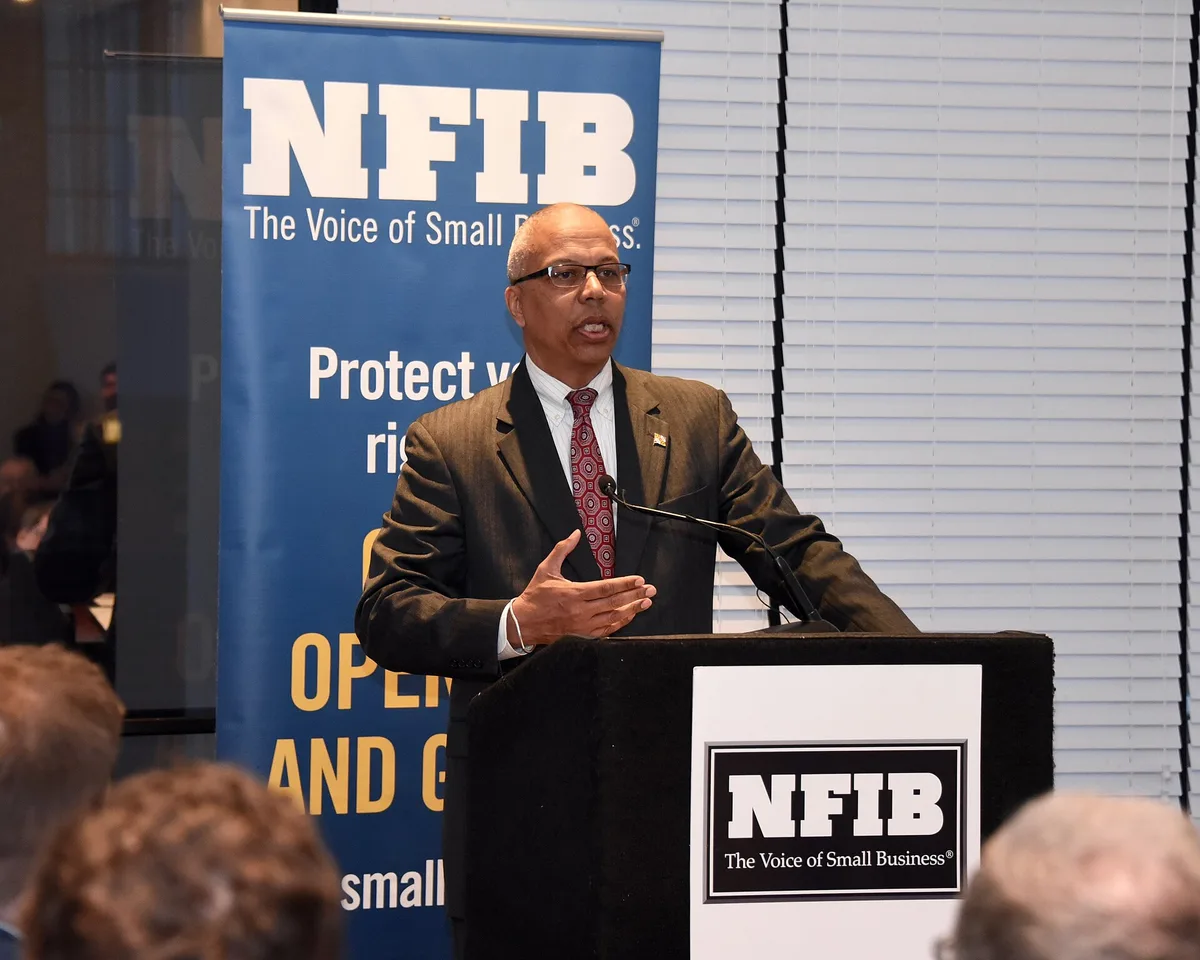
Small business hiring slowed in September, according to the latest jobs report from the National Federation of Independent Business (NFIB). A seasonally adjusted 32% of small business owners reported job openings they could not fill, down three points from August but still eight points above the historical average. Overall, 51% of owners said they hired or tried to hire, down five points from the month before.
That is the headline. But the same report contains numbers pointing in a different direction, and owners reading only the summary could draw the wrong conclusion for their own staffing decisions. The small-business labor market, on this evidence, is not simply cooling. It is hesitating.
According to the NFIB report as covered by the Boston Real Estate Times, the Small Business Employment Index fell 1.2 points to 100.6 in September. That is below the 2025 average of 101.2 but above the historical average of 100.0. Meanwhile, a seasonally adjusted net 17% of owners said they plan to create new jobs over the next three months, unchanged from August. Future hiring plans held steady even as current hiring fell.
Why did hiring slow if demand for workers stayed high?
The report itself offers the answer: owners are being more careful about when to add to payrolls. NFIB State Director Christopher Carlozzi said, "Small business owners still want to hire, but they're thinking carefully about when to bring someone on." He pointed to cost pressures in high-cost states, noting that adding one person to a payroll in Massachusetts means paying "some of the highest unemployment insurance taxes and healthcare expenses in the nation."
So the slowdown looks less like fading demand and more like a timing decision. Twenty-seven percent of owners reported openings for skilled workers, down four points from August, while 16% reported openings for unskilled labor, up three points. The mix shifted toward roles that are easier to fill, which is consistent with owners narrowing their searches rather than abandoning them.
Is labor quality really the problem, or is it labor cost?
Here the data splits cleanly, and the split matters. Twenty-six percent of owners named labor quality or availability as their top operating problem in September, up three points and 14 points above the historical average of 12%. At the same time, only 6% named labor costs as their single most important problem, down one point and the lowest reading since December 2020. We covered a connected angle in Half of New US Businesses Reach Year Five, Federal Data Shows.
Two readings are possible. One: finding qualified people is genuinely the binding constraint, and cost worries have eased. The other, more skeptical reading: the two measures move together. When owners hesitate to hire, they stop shopping for workers, and the cost pressure recedes with the search. Among owners hiring or trying to hire, 45% reported few or no qualified applicants — 25% said few, 20% said none. That figure supports the first reading, since it comes from owners actually in the market.
What does the compensation data suggest?
Pay trends also cut both ways. A seasonally adjusted net 28% of owners reported raising compensation, down three points from August. But a net 20% plan to raise compensation over the next three months, up two points. Owners are paying less today than they expected to yesterday, and planning to pay more tomorrow than they did last month. Readers following this should also see SambaNova and Keyfactor Raise $1 Billion Each in a Two-Mega-Round Week.
That pattern fits a labor market in transition rather than a downturn. It also fits a group of owners waiting to see whether the softening continues before committing. The report's own framing — fewer hiring efforts, continued difficulty finding qualified applicants, continued plans for raises — supports that measured interpretation. For owners weighing a hire, the practical consequence is straightforward: the constraint is applicants, not appetite, and the cost picture is the most favorable it has been in years by this measure.