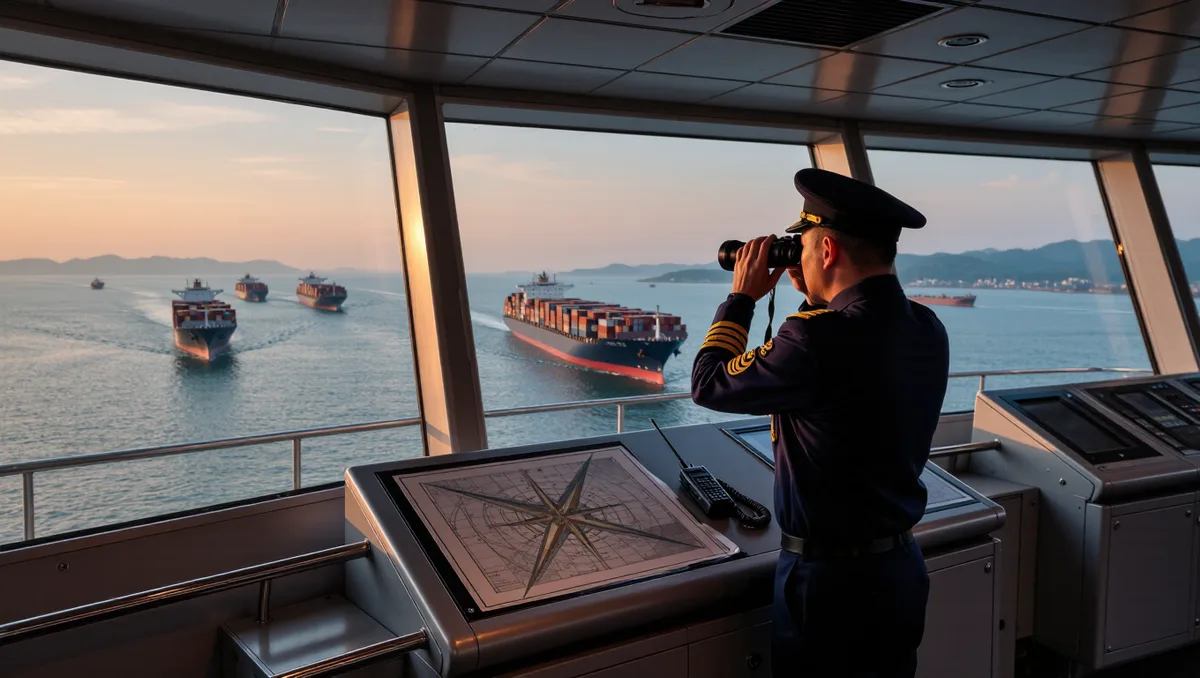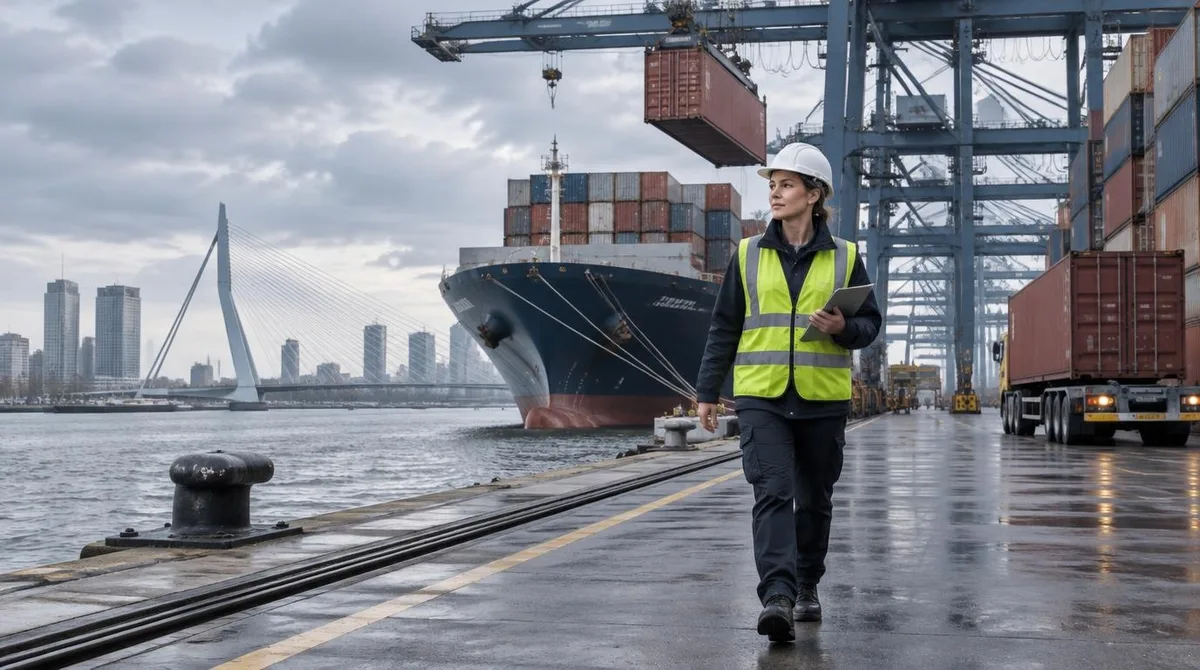
Behind every overseas order sits a machine most owners never see: the container terminal. A ship ties up at a berth, cranes lift boxes off in long rows, and a yard of stacked steel decides how fast the cargo reaches a truck. That machine is the real story of global shipping.
The scale is documented. Per an account by a Port of Rotterdam manager, recorded in Wikipedia's container terminal entry, the cargo of one large 18,000-TEU ship fans out across 19 container trains, 32 barges and about 1,560 trucks. One vessel, three transport modes, and a schedule where every hour of crane time counts. For related coverage, see Which Incoterm Should a First-Time Exporter Choose.
How a Terminal Moves a Box
A maritime terminal is a transfer point between ships and land vehicles. The flow runs in four stations. First the berth, where the vessel docks. Second, ship-to-shore gantry cranes, often remotely controlled, lift containers onto the quay. Third comes the yard, where boxes rest in container stacks until their ride appears. Fourth is the gate, where trucks hand off cargo for inland delivery.
Each station has its own clock, and the yard is the buffer between them. Trains, barges and trucks rarely arrive in the order the crane discharges, so the stack absorbs the mismatch. A terminal works when the stacks turn over quickly; it clogs when boxes sit.
The Journey Started in 1956
The system is young. Per Wikipedia's account, the first maritime container terminal took shape at Port Newark in New Jersey, where the Ideal X was rigged on April 26, 1956, to test standardized boxes stacked and unloaded onto truck chassis. The concept came from the McLean Trucking Company. By 1962 the Port Authority of New York and New Jersey had opened a dedicated container port at Elizabeth.
The Fee Clock: Demurrage, Detention and Free Time
For owners, the yard's buffer has a price list. Carrier Maersk defines demurrage as the time filled containers spend inside the terminal, measured from offloading until pickup at the gate. Detention covers the time outside the terminal, from pickup when full until return when empty. The clock pauses only during free time, which Maersk's terms describe as the period agreed between carrier and merchant during which those charges are not paid.
Storage is a separate line. Per Maersk's published terms, storage compensates a port, terminal or depot for space used beyond the agreed free time, whether the container belongs to the carrier or the shipper. A slow pickup can therefore stack several charges on one box.
Where Bottlenecks Form
Delays cluster where modes meet. A rail ramp falls behind, a truck appointment system fills, or a surge of vessels arrives at once, and the yard fills faster than the gate can drain it. Wikipedia's entry notes loaded containers are stored for relatively short periods while empties may sit far longer, so idle equipment itself consumes yard space. Customs holds and weather shrink the buffer further.
What Owners Can Watch
The levers sit in the paperwork. Free time is agreed, not automatic, so the days granted per container deserve a look before the booking is confirmed. Pickup timing matters as much: a container pulled inside free time collects no demurrage, and an empty returned promptly stops detention. Importers who treat the gate appointment as part of the order, not an afterthought, keep the fee clock from running.
Conclusion: The Terminal Is the Schedule
Global shipping looks like ships on a map, but the schedule lives on land, in the berth, crane, stack and gate of one terminal. The 1956 experiment at Port Newark built the system, and Rotterdam's 1,560 trucks show its reach. Owners who learn the fee clock and the yard's rhythm hold the same leverage as owners who negotiate freight rates. This connects to our earlier piece, What Moves Ocean Freight Rates and Why They Swing.