A customs bond is a financial guarantee, issued by a surety, that the importer of record will pay whatever duties, taxes, and penalties Customs ultimately assesses on its entries — required for nearly all commercial imports into the United States, including most formal entries and any entry through a customs broker. U.S. Customs and Border Protection requires it because entry summaries are filed and goods released before final duty is settled: the bond is what stands behind the government's claim in the gap. Importers caught without a valid bond face held cargo and brokerage scrambling; importers whose bonds are too small face claims against their own assets. This article explains the mechanics.
What Are the Two Kinds of Bond?
A single-entry bond covers one importation, its amount set by the entered value plus duties and fees — with higher minimums for certain merchandise. A continuous bond covers all of an importer's entries for a year, with a minimum amount of $50,000, but conventionally purchased at 10 percent of the importer's annual duties, taxes, and fees, rounded up. The crossover rule of thumb is volume: once annual duty payments reach roughly the level where a year of single-entry premiums exceeds the continuous-bond cost — often around a handful of formal entries per year — the continuous bond wins on both cost and convenience, because every entry, broker, and port runs off one bond on file. Importers whose entries carry additional obligations, such as merchandise subject to other-agency requirements, may face stipulated minimum amounts above the standard floor.
What Exactly Does the Bond Guarantee?
The bond guarantees the importer's compliance with entry obligations: payment of duty, taxes, and fees finally assessed; production of documents and records demanded by Customs; completion of entry procedures; and rectification of noncompliance found later. If CBP demands additional duty after release — a reclassification, a value adjustment, a penalty from a post-entry audit — and the importer does not pay, the government claims against the bond, the surety pays, and the surety recovers from the importer under indemnity. The bond is therefore not insurance against duties; it is collateral guaranteeing the importer's own obligations, which is why claims ultimately land back on the importer plus surety costs. Because the surety underwrites the importer's credit, new importers without history may pay higher premiums or need to renew annually with financials.
Who Needs One and When?
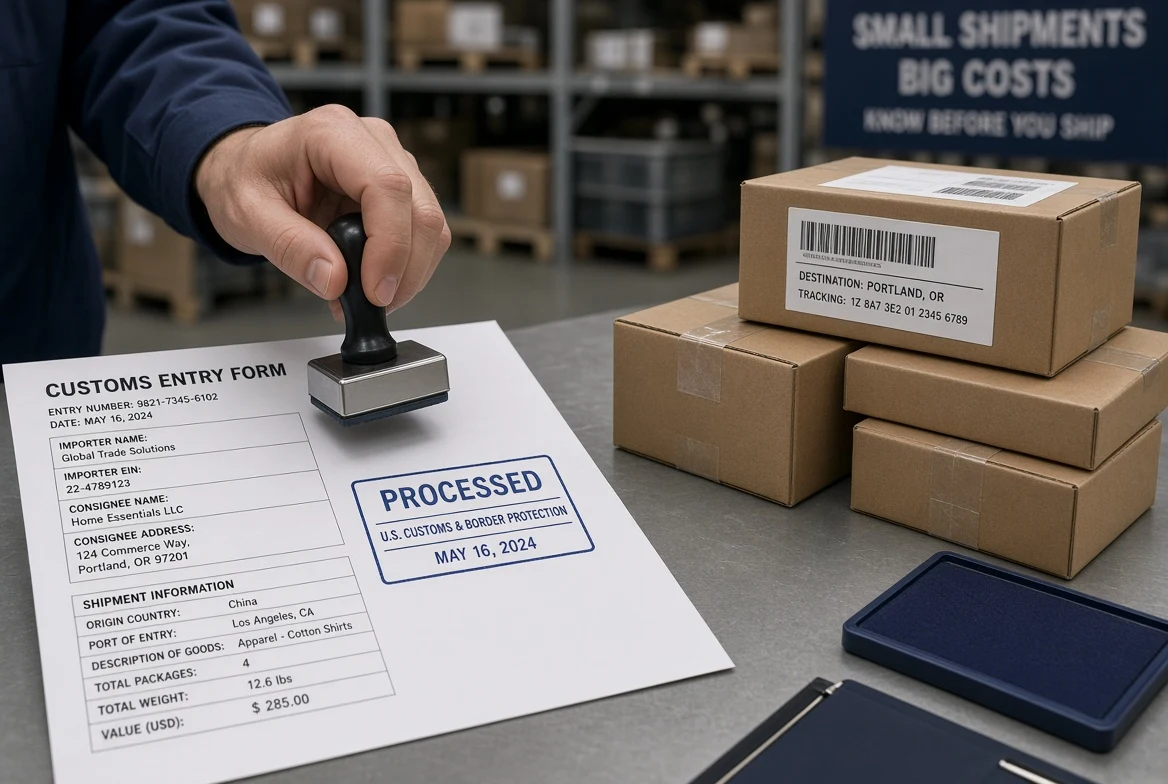
The practical triggers: entries filed through a customs broker (brokers cannot file without a bond on file), any formal entry, imports of goods above de minimis thresholds, and special regimes — international carriers, customs warehouses, foreign trade zones — that carry their own bond types. Notably, following the 2026 changes ending duty-free de minimis treatment for most low-value shipments, many small e-commerce importers encountered bond requirements for the first time, because entries that once cleared without paperwork now require formal or informal entry procedures backed by a bond. Importers should also watch bond adequacy as they grow: a continuous bond sized to last year's duties that no longer covers this year's volume leaves the importer exposed for the difference — the surety remains liable to the government, but the importer is liable to the surety, and renewal terms will reflect it.
How Do You Get One and Keep It Valid?
Bonds are purchased through surety companies or, most commonly, arranged by the customs broker as part of onboarding, with annual cost for a minimum continuous bond typically a few hundred dollars. Maintenance is simple but real: renew on time — a lapsed continuous bond halts entries until replaced; keep the size aligned with actual duty volume; and update importer identity details if the business structure changes, because the bond attaches to the exact importer of record. The lesson: the bond is the entry system's seatbelt — invisible when everything goes right, and the only thing standing between the importer and stopped cargo when Customs asks a question.