Free trade agreements lower an export bill by eliminating or reducing the duty a foreign buyer would otherwise pay on qualifying U.S. goods — and the mechanism is a claim, not an automatic discount: the product must meet the agreement's rules of origin, and the exporter or importer must certify that fact at entry. The United States currently maintains FTAs with 20 countries, including Canada and Mexico under USMCA, Korea, Australia, and Central American nations, per the Office of the U.S. Trade Representative and the International Trade Administration's trade-agreement resources. Used deliberately, preference is a price lever — the exporter can keep the saving as margin, share it with the buyer, or win business against non-FTA competitors who cannot offer it. This article walks the mechanics.
Where Does the Saving Actually Appear?
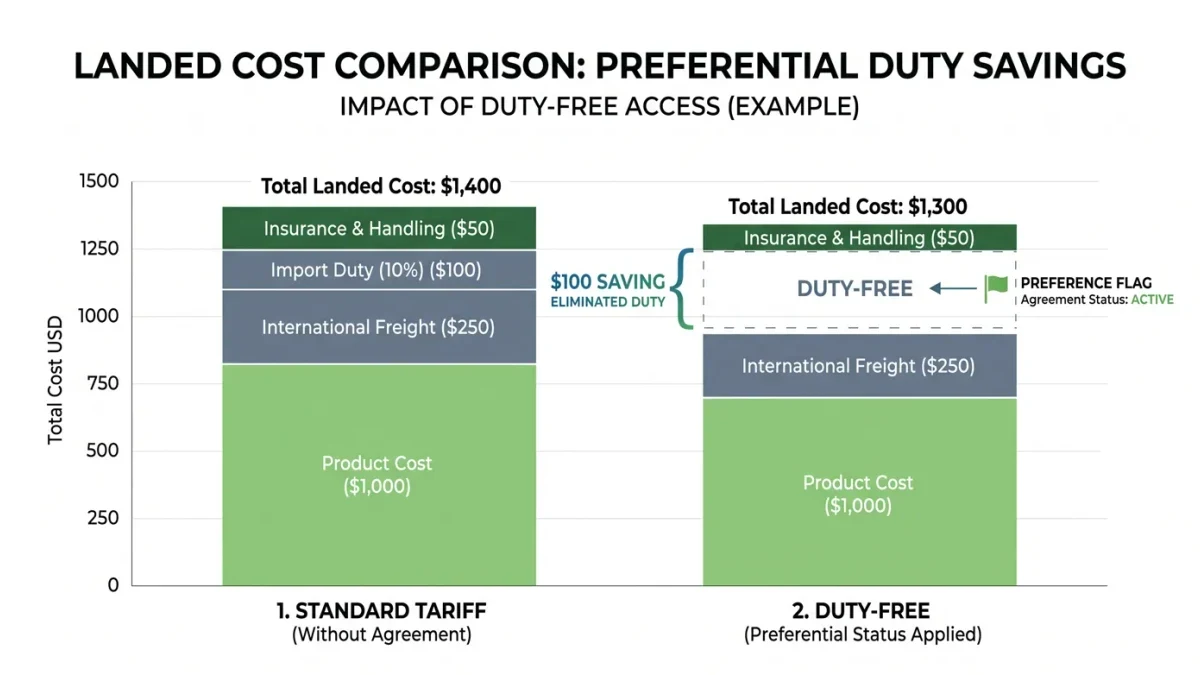
Duty is paid by the importer of record in the destination country on the customs value of the goods. When a shipment qualifies under the FTA and the entry claims preference, that duty line drops to zero or a reduced rate — on non-zero MFN tariffs, which is where the money is. The practical consequences for the U.S. exporter are indirect but real: a buyer comparing suppliers prices the landed cost, goods plus freight plus duty, and a qualifying U.S. offer lands cheaper than a non-qualifying competitor's even at a higher invoice price. Exporters who cannot say whether their goods qualify forfeit the argument; exporters who can, put the number in the quote.
How Does a Product Qualify?
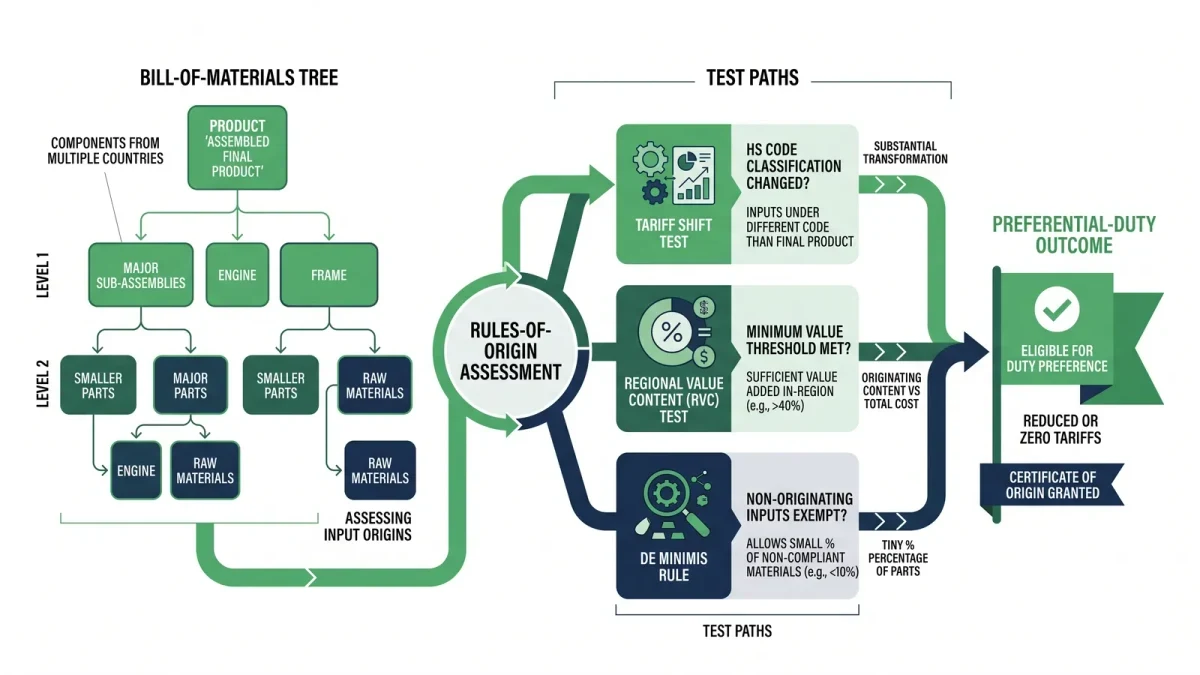
Each agreement sets product-specific rules of origin, published alongside the tariff schedule in the agreement text — typically tariff-shift requirements (inputs from outside the region must change HS classification enough), regional value content minimums (a percentage of the good's value must originate in the FTA region), or wholly-obtained tests for agricultural and resource goods. The exporter builds the qualification analysis from its bill of materials: origin of each input, the HS codes, and the manufacturing steps, concluding whether the rule is met. Two disciplines matter. First, de minimis and accumulation provisions can rescue near-miss products — small non-originating content is tolerated, and inputs from other FTA parties often count as originating — so a product that fails the headline rule may pass the fine print. Second, inputs' origins must be documented by supplier declarations, because the certifier's liability covers the whole chain, not just its own factory.
How Is the Claim Made at Entry?
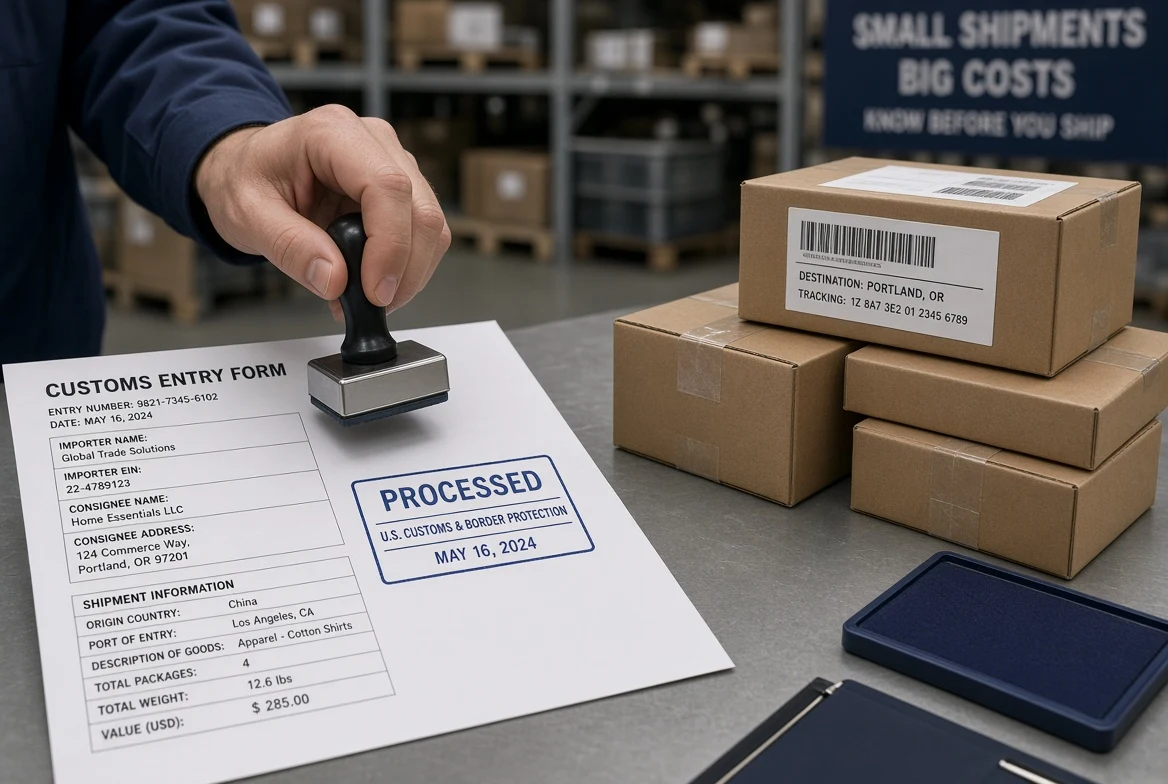
Each agreement specifies its certification format — USMCA's nine-element flexible certification, the formal certificates used under Korea and Australia, or importer knowledge-based claims where the agreement allows. The exporter issues the certification to support the importer's preference claim, and both sides retain the supporting documentation for the retention period each agreement sets, commonly five years. Customs authorities verify claims after entry, sometimes years later, and an unsupported claim converts the saved duty into duty plus interest plus penalties. The operational discipline is boring and essential: a qualification file per product, updated when inputs change, certifications issued only from that file, and a rule against certifying products whose analysis does not exist.
How Should Exporters Use Preference Commercially?
Three plays cover most cases. In price-sensitive markets, quote the duty saving explicitly: "landed cost with preference is X percent below the non-qualifying alternative." In competitive displacements, offer to share the first year's saving with the buyer as a switching incentive. And in markets where the buyer's own suppliers never mention qualification, simply being the supplier who shows up with the analysis is differentiation. The lesson: the FTA discount is real money sitting on the buyer's side of the border — exporters who do the qualification math and put it in the quote collect it; exporters who don't leave it to competitors.