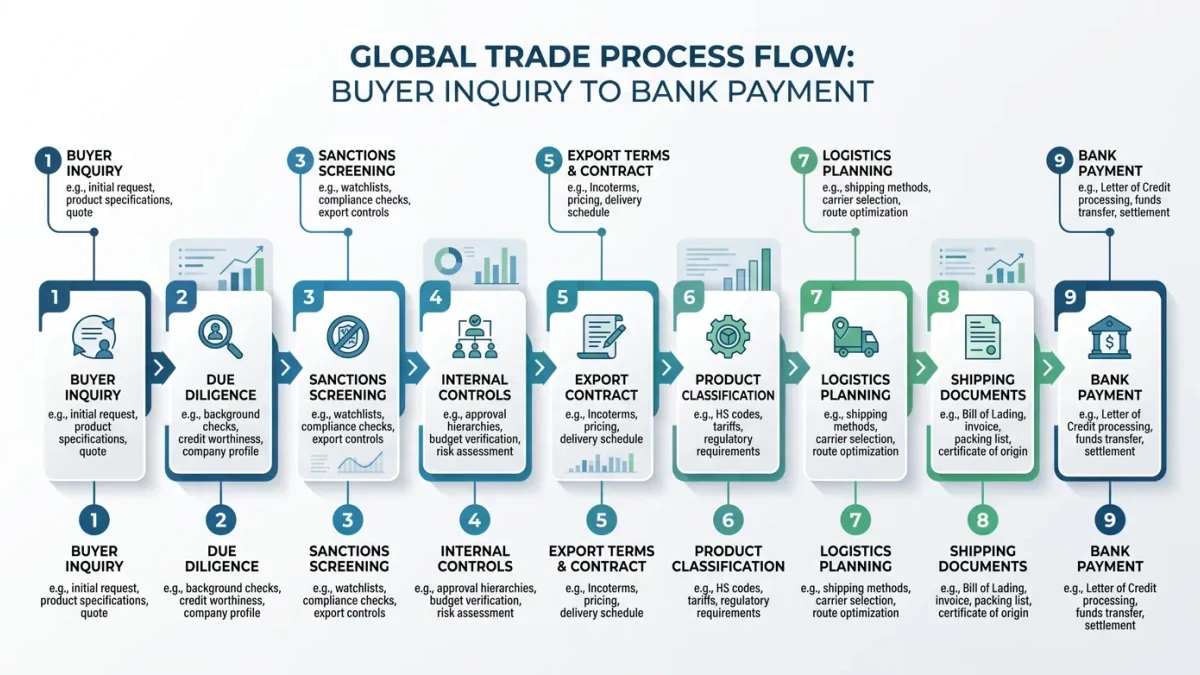
A small manufacturer's first export sale involves nine gates — buyer verification, export controls screening, registration, Incoterm and payment selection, classification, logistics booking, documentation, insurance, and financing — and deals die at whichever gate was skipped. The U.S. Commercial Service, the Commerce Department's export-assistance arm, counsels new exporters through exactly this sequence, and its consistent advice is that first sales go to familiar markets with standard payment terms, not exotic destinations with exotic margins. This checklist walks the gates in order.
Before the Contract: Who Is the Buyer?
Gate one is counterparty diligence: verify the company exists and can pay — trade references, a credit report through providers or export-credit agencies, and confirmation that the contact represents the entity claimed. Gate two is restricted-party screening: U.S. exporters must check buyers against consolidated denied-party lists, a step the Commerce and Treasury departments provide free lookup tools for, because shipping to a listed party carries penalties regardless of intent. Gate three is export controls: most manufactured goods ship under general export authority, but products with encryption, aerospace, defense, or dual-use characteristics require classification against the Commerce Control List before anything moves. These three gates are the legal spine of the deal; everything after them is commercial.
Structuring the Deal: Terms, Classification, Price
Gate four fixes the commercial skeleton: the Incoterm (who bears freight and risk), the payment method, and the currency. First-time exporters should insist on payment security — an irrevocable letter of credit confirmed by a U.S. bank, or export credit insurance through the Export-Import Bank's programs for small business, which insures receivables against foreign buyer nonpayment. Gate five is classification: assign the HS/Schedule B code for export declaration, and price the landed cost for the buyer honestly — duties, freight, and insurance quoted into the model rather than discovered after signature. Gate six is logistics: a freight forwarder experienced in the destination market books carriage, advises on packing and marking requirements, and prepares the shipment's entry into the export-declaration system.
Documents, Insurance, and Getting Paid
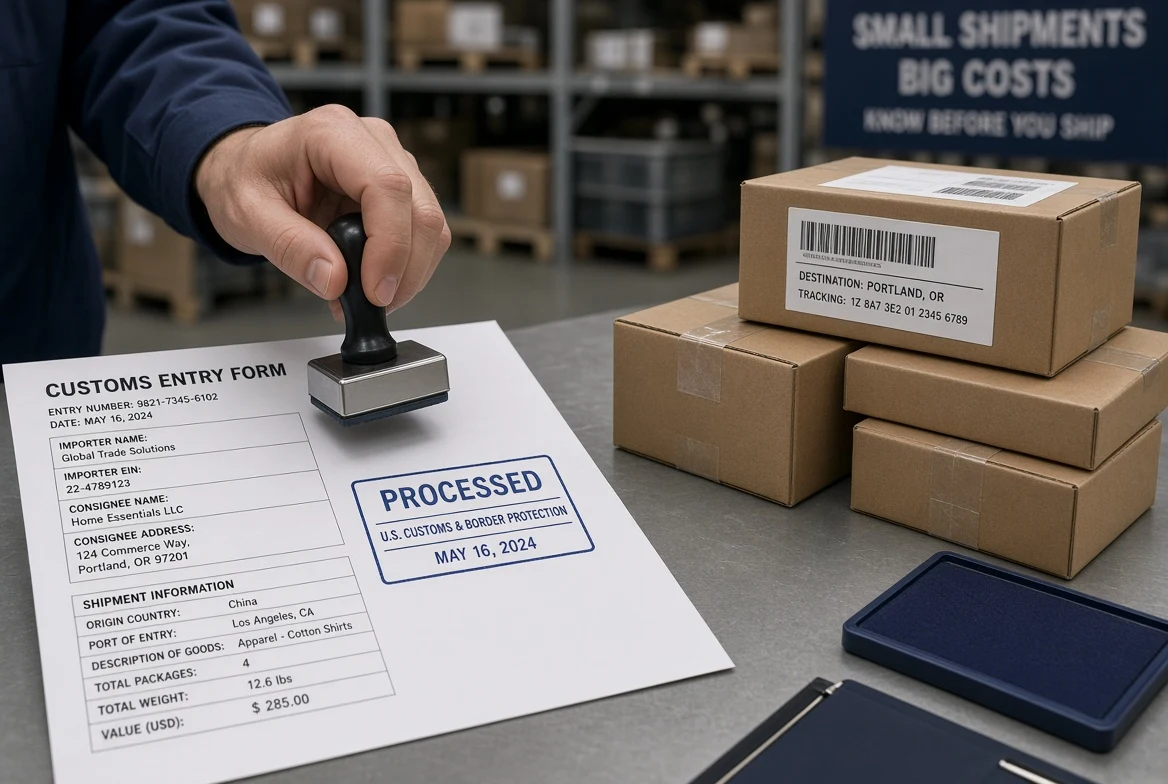
Gate seven is documentation, where first exports stumble. The standard set: commercial invoice with the buyer, seller, terms, codes, and values stated consistently across every document; packing list; bill of lading or airway bill; certificate of origin if the buyer or the destination requires one for preference or regulatory entry; and any product-specific certificates — health, phytosanitary, free-sale — the destination demands. Discrepancies between documents are the leading cause of letter-of-credit payment failures, so each document should be drafted against the L/C's exact wording. Gate eight is insurance: marine cargo coverage matched to the chosen Incoterm, with the risk-transfer point and the insured party aligned. Gate nine is the money mechanics: present documents through the bank precisely as the payment instrument requires, book the export declaration so the shipment reconciles, and confirm receipts before the relationship scales.
What Should Manufacturers Do Differently on Deal Two?
The second export sale is where the checklist becomes a system: template the documents, standardize the forwarder relationship, and decide which markets earn repeat attention. Manufacturers consistently report the same surprise on first shipments — that the paperwork's internal consistency matters more than its volume, and that banks pay against documents, not intentions. The lesson: run the nine gates in order every time, and the first sale stops being an adventure and becomes a channel.