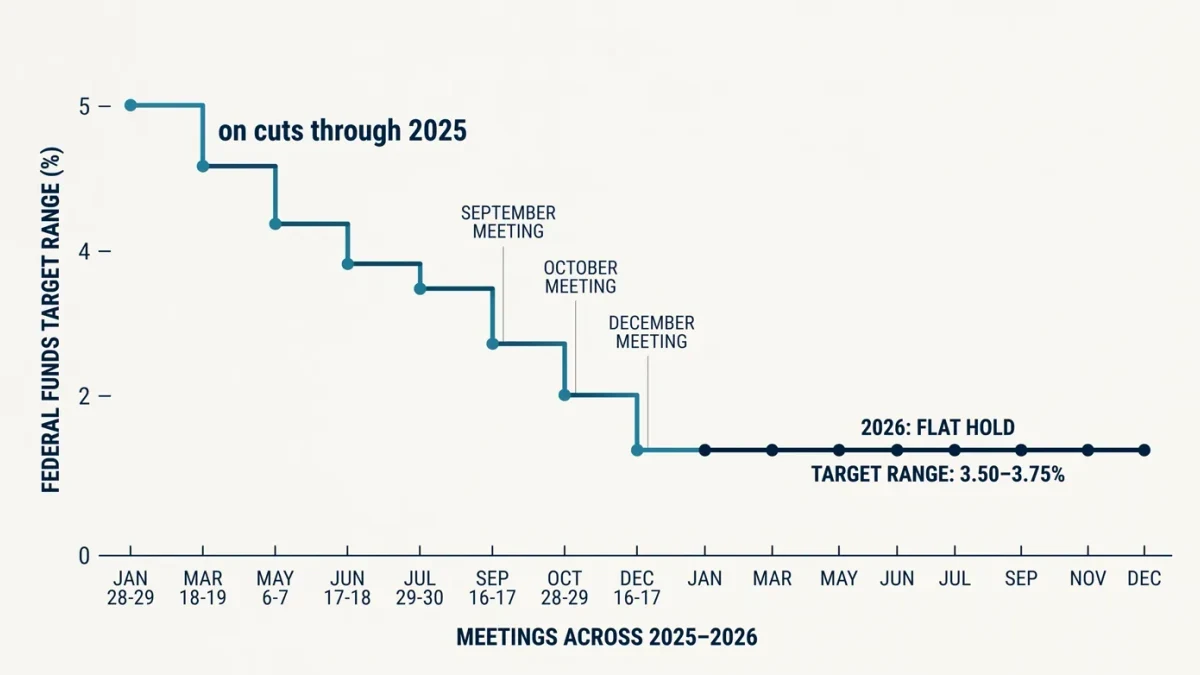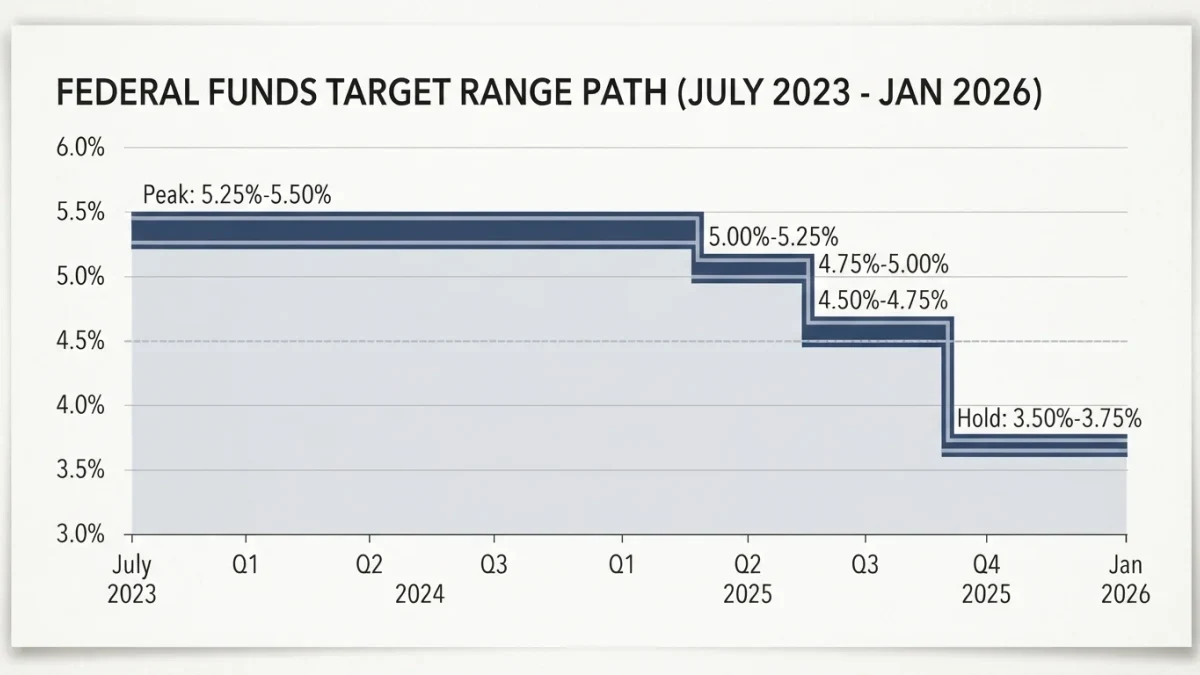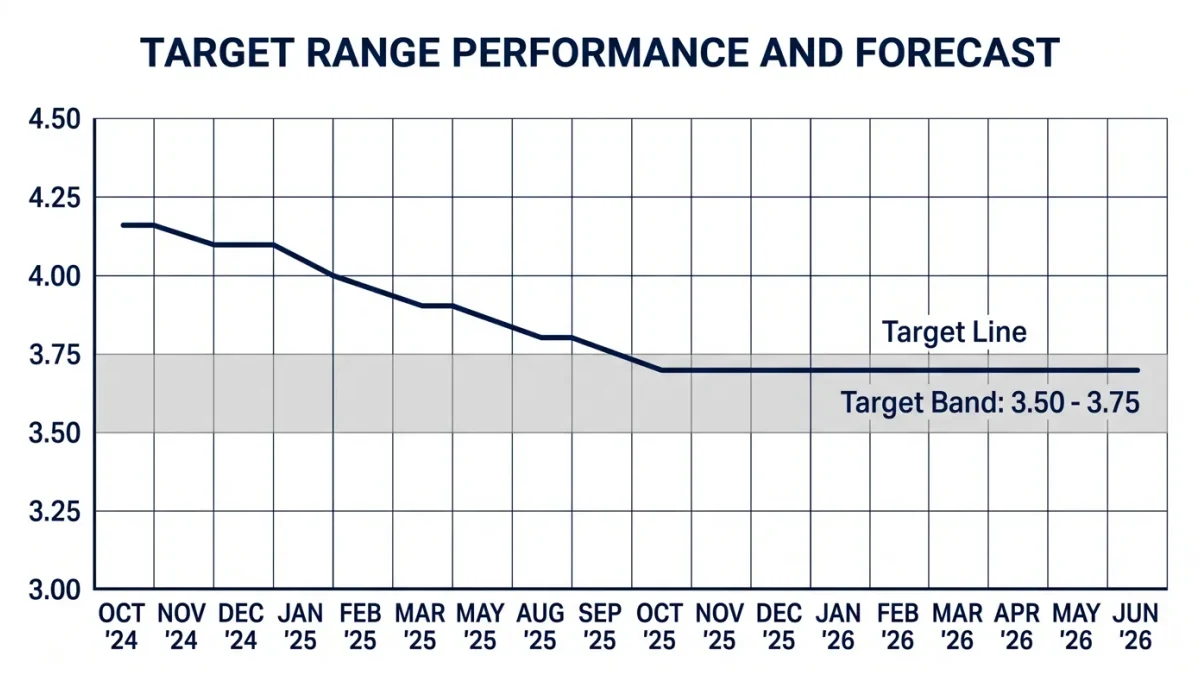
The Federal Reserve paused at its January 27-28, 2026 meeting, holding the federal funds target range at 3.50-3.75 percent and ending the cutting streak that had produced December's quarter-point reduction, per the committee's statement — with the decision again passing by a split vote reflecting continued disagreement over the policy path, as both J.P. Morgan and Charles Schwab's meeting coverage noted. The hold confirmed what December's dissent-heavy minutes had signaled: officials were unwilling to commit to further easing without clearer progress on inflation or the labor market.
What Does the Pause Mean?
A hold is a decision with content, not the absence of one. By keeping the range at 3.50-3.75 percent, the committee bracketed 2026's opening with a message that the rapid adjustment phase of this cycle is over and future moves will be data-dependent — slower to arrive and harder to pre-price. The continued 9-3-style split matters to anyone financing a business this year: when the setting committee itself is divided, forward guidance carries little weight, and the practical planning assumption shifts from "rates glide lower" to "rates sit here until the data forces a move." Markets spent the inter-meeting weeks repricing accordingly, which is why fixed-rate quotes moved even though the policy rate did not.
What Should Small Businesses Do With It?
The pause argues for three concrete moves. First, treat current floating rates as the base case rather than a waypoint: audit every credit line and card balance and model a full year at today's index levels, so a further cut is upside rather than expectation. Second, use the stability to negotiate: lenders price fixed-term debt off a long end that has already adjusted to the pause, and competition among banks for creditworthy small borrowers remains real — quotes from three institutions on the same equipment loan still differ meaningfully. Third, revisit the deposit side: with the target range holding at 3.50-3.75 percent, business savings and sweep accounts finally pay rates worth comparing, and the difference between an attentive treasurer and a passive one is now real money on idle balances. The businesses hurt by a pause are those that financed expansion assuming continuous cuts; the ones helped are those holding cash they can now earn on.
The takeaway for owners: January's hold converts the rate environment from a tailwind story into a stability story — no cheaper money is coming on schedule, so the leverage is in negotiating fixed terms now and earning on balances while the range holds.