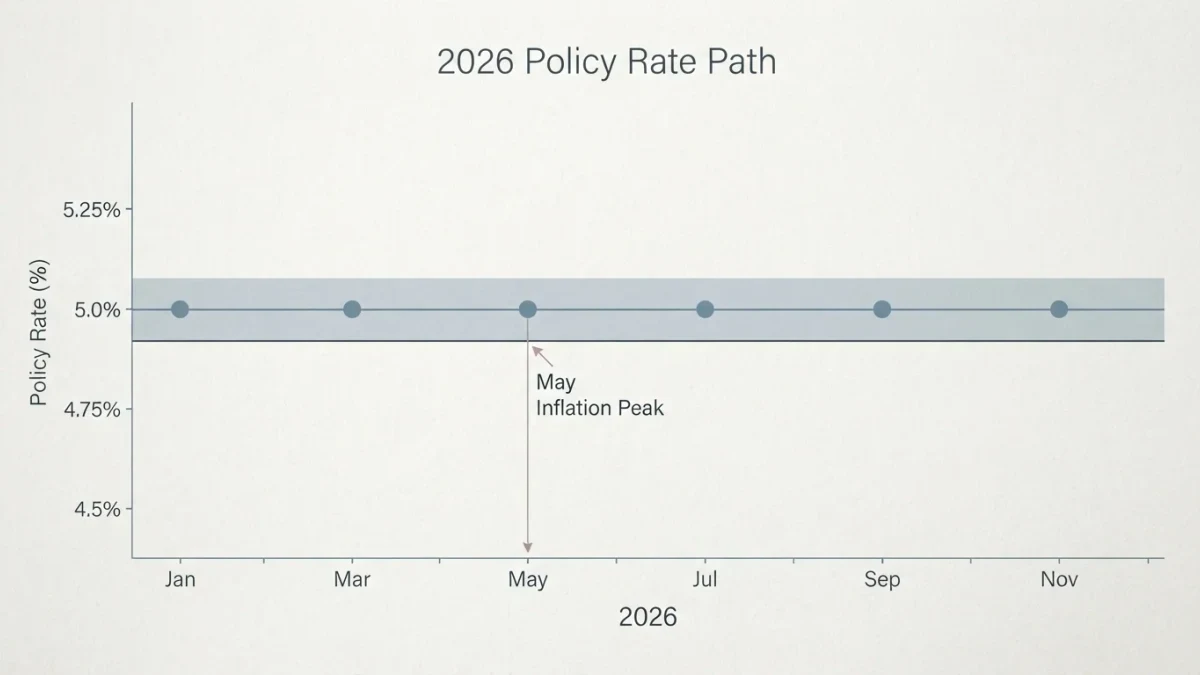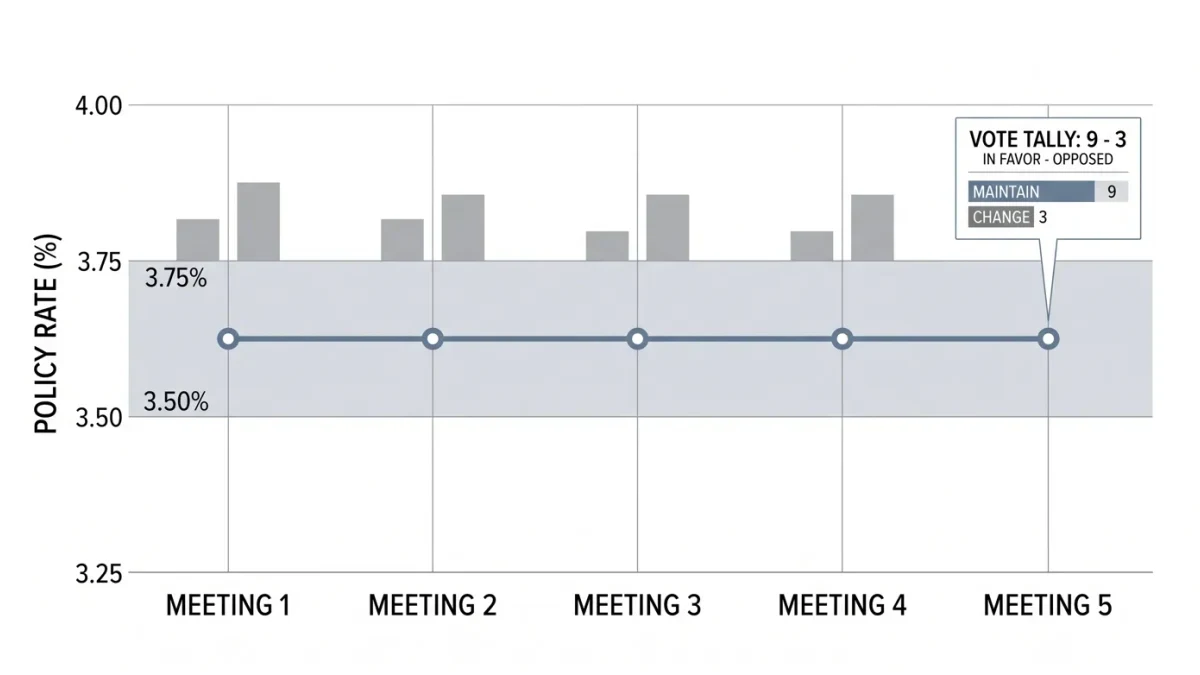
The Federal Reserve held the federal funds target range at 3.50-3.75 percent at its July 28-29, 2026 meeting — the fifth consecutive hold of the year, again passing by a 9-3 vote that kept the committee's internal split on display, per the meeting statement and its coverage. The decision extended the pause to a full half-year and left intact the single rate cut the March projections had signaled for 2026, preserving it as a late-year possibility rather than a promise.
What Is the State of Play?
Eight months into 2026, the policy story has been remarkably simple: three cuts ended in December 2025, and every meeting since has held the range while inflation ran well above target — 3.8 percent in April, 4.2 percent in May, easing to 3.5 percent in June per the BLS releases. The persistent 9-3-style vote margins say the committee remains split between members who see inflation risk requiring patience and those who see labor-market risk arguing for cuts — a division that has made forward guidance nearly worthless and left markets pricing the year's single cut, if it comes, for the final meetings. For the rate environment itself, stability is the news: the short end has sat in the same three-quarter-point window since December, the longest such stretch since before the tightening cycle began.
What Does It Change for Small Businesses?
A five-meeting hold converts rate planning from a forecast exercise into a budgeting fact. Three uses of that fact as the year's second half opens. Budget 2027 at current rates: any expansion plan, hire, or financing modeled on cheaper money arriving on schedule should be re-based to the 3.50-3.75 range holding — if the single cut lands late, treat it as upside, not baseline. Exploit the deposit side: with the range stable for seven months, idle-cash management — sweep accounts, treasury features, laddered CDs — has reliable yield to capture, and the businesses that have not compared bank offerings since the cutting cycle ended are leaving spread on the table. Negotiate from stability: lenders competing for creditworthy small-business borrowers price fixed-term debt off a long end that has fully adjusted to the pause; three quotes on the same loan still differ meaningfully, and the stable policy backdrop makes those differences comparable rather than moving targets. The September meeting, with its fresh Summary of Economic Projections, is the next scheduled information event; nothing in the July vote suggests surprise before then.
The takeaway for owners: half a year of unchanged policy is the rarest gift the Fed gives planners — a rate environment you can actually budget on — and the businesses that re-based their 2027 plans to it this quarter will not be surprised either way in December.