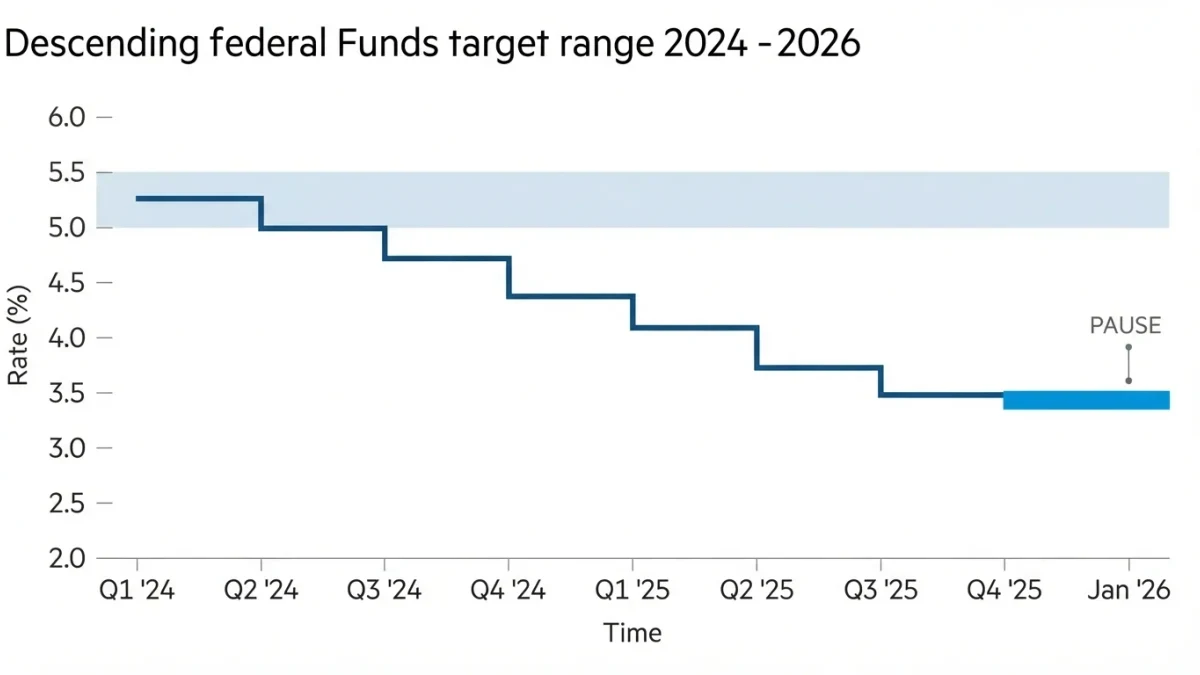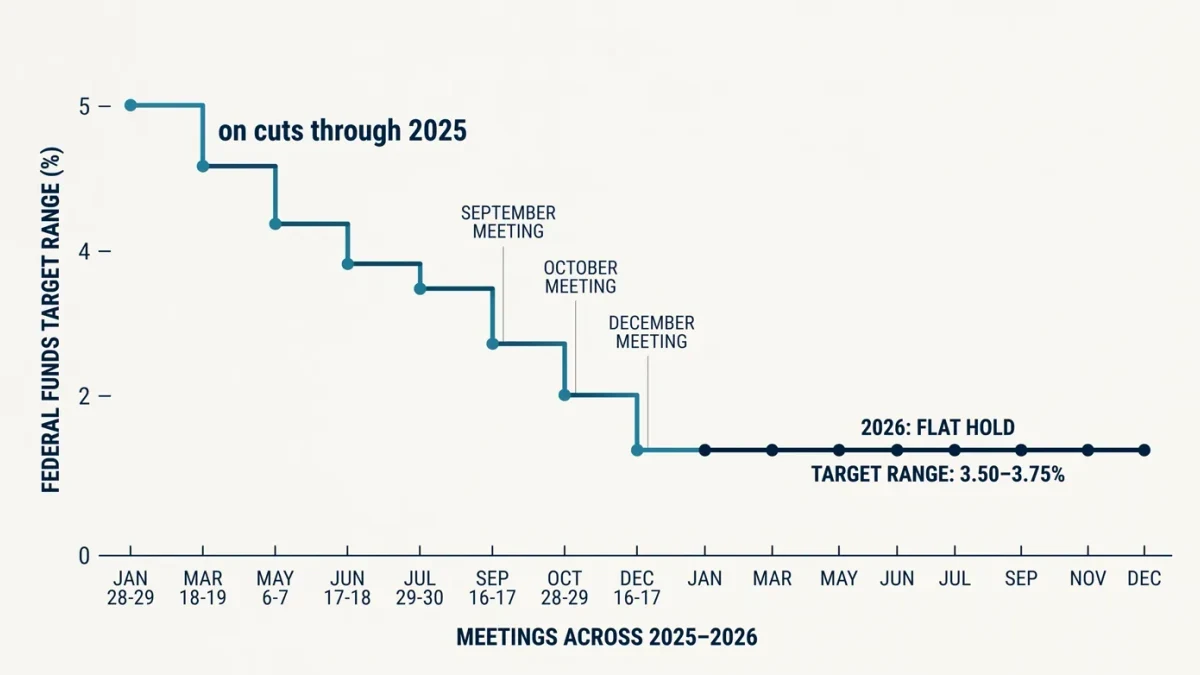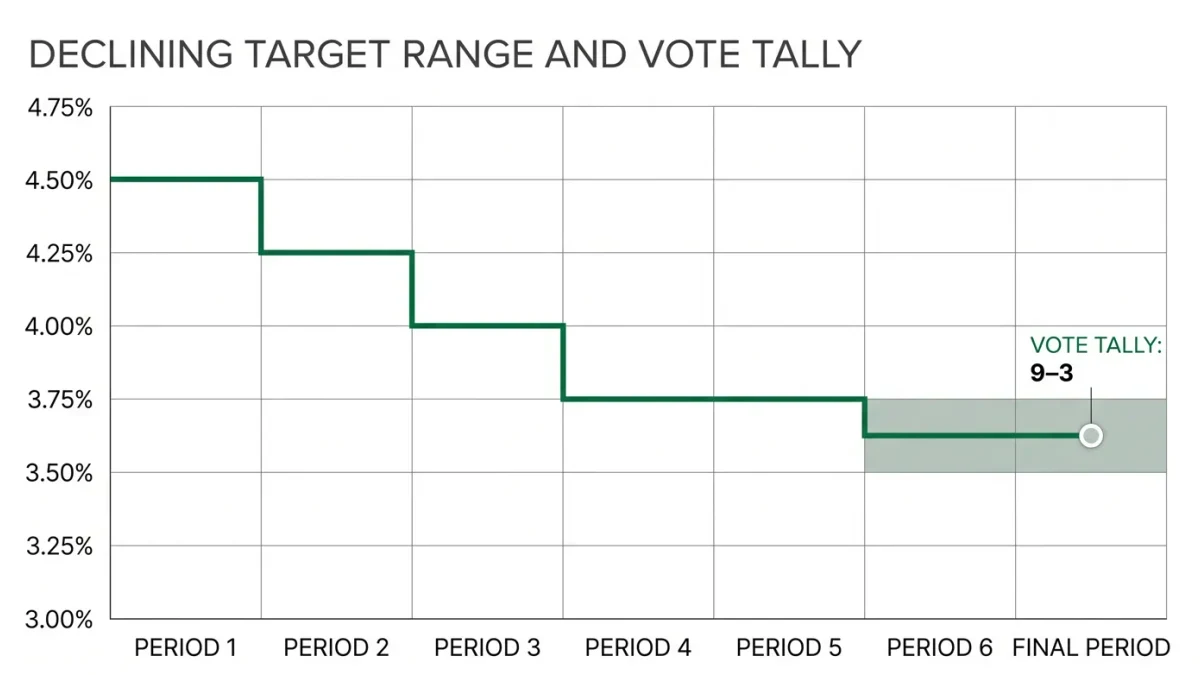
The Federal Reserve closed 2025 with a quarter-point rate cut on December 10, lowering the federal funds target range to 3.50-3.75 percent — the third cut of the year, effective December 11, with the discount rate reduced to 3.75 percent, per the FOMC's official statement. The decision passed 9-3, the most dissents since 2019, and the meeting minutes released December 30 showed significant disagreement among officials about the pace of further easing — a division that now frames every borrowing decision small businesses will make in early 2026.
What Did the December Decision Actually Contain?
Beyond the headline range, the statement lowered the interest rate on reserve balances to 3.65 percent and the primary credit rate to 3.75 percent, effective the following day. The 9-3 vote itself was the news inside the news: three officials opposed the action, an unusual level of visible disagreement that the minutes elaborated into a genuine split over inflation risk versus labor-market risk. For context, the cut followed earlier reductions in 2025 that had brought the target range down from its peak — meaning a business borrowing at floating rates ended 2026's opening roughly a full percentage point cheaper than a year prior, while fixed-rate debt priced off longer Treasury yields that had already anticipated much of the easing.
What Does It Change for Small Businesses?
The immediate mechanics are arithmetic. Floating-rate credit — cards, lines indexed to prime or SOFR — reprices downward within one to two billing cycles, so January statements carry the cut. Fixed-term borrowing prices off the long end, which moves on expectations: with the minutes showing the committee divided, markets were left uncertain whether further cuts would come quickly or at all, and that uncertainty shows up as rate volatility rather than a clean trend. Practical readouts for owners: this is a window to audit the debt schedule — every balance, index, and maturity — and to ask lenders about converting floating exposure to fixed while short rates sit below their recent peak; it is also the moment deposits finally earn something resembling a return, worth comparing across banks. The divided committee cuts both ways: owners should plan for rates holding near current levels rather than assuming a glide path down, because the people setting the policy visibly disagree about it.
The takeaway for owners: December's cut delivered cheaper floating money into January, but the 9-3 vote and its minutes are the real story — the Fed itself cannot agree on what comes next, so lock what you can at these levels and stress-test the year assuming they stay.