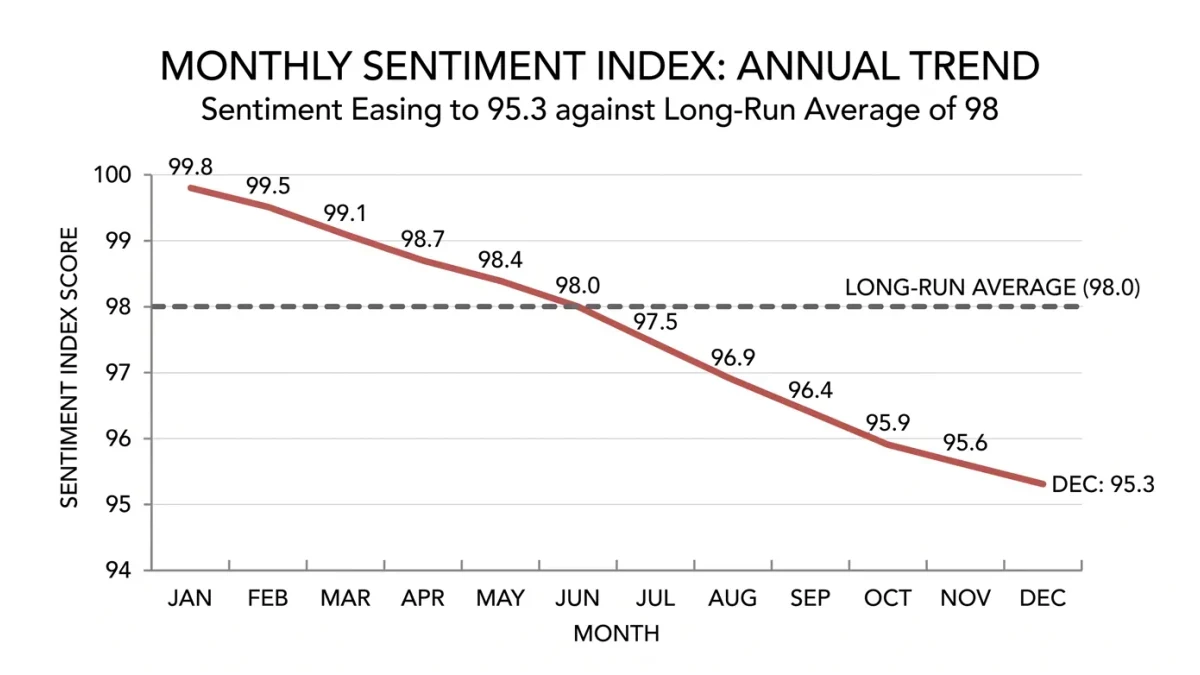
Small business optimism weakened in May 2026, with the NFIB Small Business Optimism Index falling 0.6 points to 95.3 and settling below its 52-year historical average of 98, the National Federation of Independent Business reported June 9, 2026. The monthly survey of NFIB member firms is one of the longest-running reads on Main Street sentiment, and the May reading put the recovery from prior years' swings on pause rather than in reverse.
Business News 7 publishes information, not economic advice; survey readings describe conditions, not forecasts for any individual business.
What Drove the May Decline?
Per the NFIB's release, the dip reflected continued pressure from labor costs and taxes, which remained the leading weights on owner sentiment — a picture echoed by industry observers including the National Association of Manufacturers, which noted taxes and labor costs softening optimism in its own readout of the period. Compensation pressures have been a persistent theme in the survey series: with qualified labor scarce for several years, owners have raised wages to attract and hold workers, and the cost shows up both in reported sentiment and in pricing plans. Taxes, the other named pressure, tracks the run-up in filing-season obligations and scheduled thresholds rather than a single new policy event.
What Does It Change for Owners?
A sub-average optimism reading is a planning signal, not an alarm. For owners weighing hires, the labor-cost pressure the survey captures argues for the discipline of hiring against documented saturation rather than anticipation. For those weighing prices, the persistent cost backdrop explains why price-increase plans have remained elevated across the survey series — passing through input and wage costs has been the survival pattern of the period. And for anyone negotiating leases or loans, a sentiment dip is simply context: landlords and lenders read the same surveys, and caution on both sides tends to make terms negotiable in slowdown windows. The components worth watching next are the net percent of owners expecting better business conditions and the percent planning to create new jobs — the forward-looking items that historically turn before the headline index does.
The takeaway for owners: May's 95.3 confirms cost pressure is still the Main Street story of 2026 — the businesses managing labor and tax load deliberately are the ones insulated from the sentiment cycle the index measures.