Quitting a salary to run a side business full time is safest when the business already replaces a large share of take-home pay, the growth trend is visible in months of data, and personal reserves cover the gap. Founders who wait for all three markers report calmer transitions; those who jump on a single good month most often cite cash pressure within the first two quarters. Census Bureau household survey data has shown for years that many new businesses start while founders keep other work — so the question of when to switch is one of the most common in entrepreneurship. This article lays out the thresholds.
What Income Threshold Makes the Leap Safe?
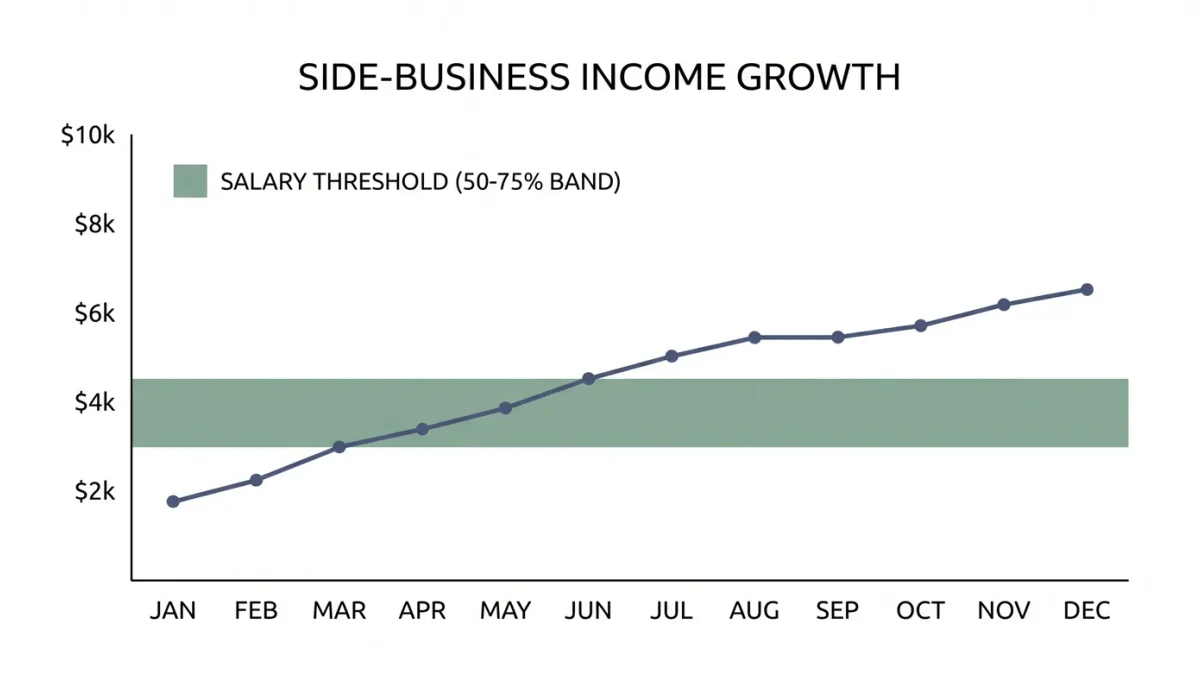
The convention among experienced owners and advisors is a side business consistently earning 50 to 75 percent of the founder's take-home pay before quitting. Below 50 percent, the business has to double fast merely to replace salary while also absorbing the founder's full-time attention for the first time — a compounding stress. At 75 percent, the remaining gap is small enough that a modest lift in hours closed it for many founders within two quarters. The key word is consistently: measured over at least six consecutive months, not one seasonal peak. A holiday-driven spike in December says nothing about April.
How Much Cash Reserve Is Enough?
Personal runway is the second gate. A common planning floor is six months of personal expenses in cash, on top of any business operating balance, because early full-time businesses often earn less per founder-hour than the side version did — at least initially, while systems are built. Founders with dependents or uneven household income typically aim higher. The reserve is not there to fund losses indefinitely; it exists to buy decision-making time if the first two full-time quarters disappoint, so the founder can adjust pricing or offering from a position of patience rather than panic.
What Does the Demand Signal Look Like?
Income is the trailing indicator; demand is the leading one. Clear signals that a business is ready for full-time effort include:
- Turning away work because of limited evening and weekend hours.
- A waitlist or booking backlog stretching three weeks or more.
- Repeat customers or subscriptions producing predictable baseline revenue.
- Inbound requests arriving without any active promotion.
Any one of these alone is a hint; two or more together mean the constraint on growth is the founder's hours — which is precisely what going full time fixes.
Which Practical Steps Belong on the Checklist?
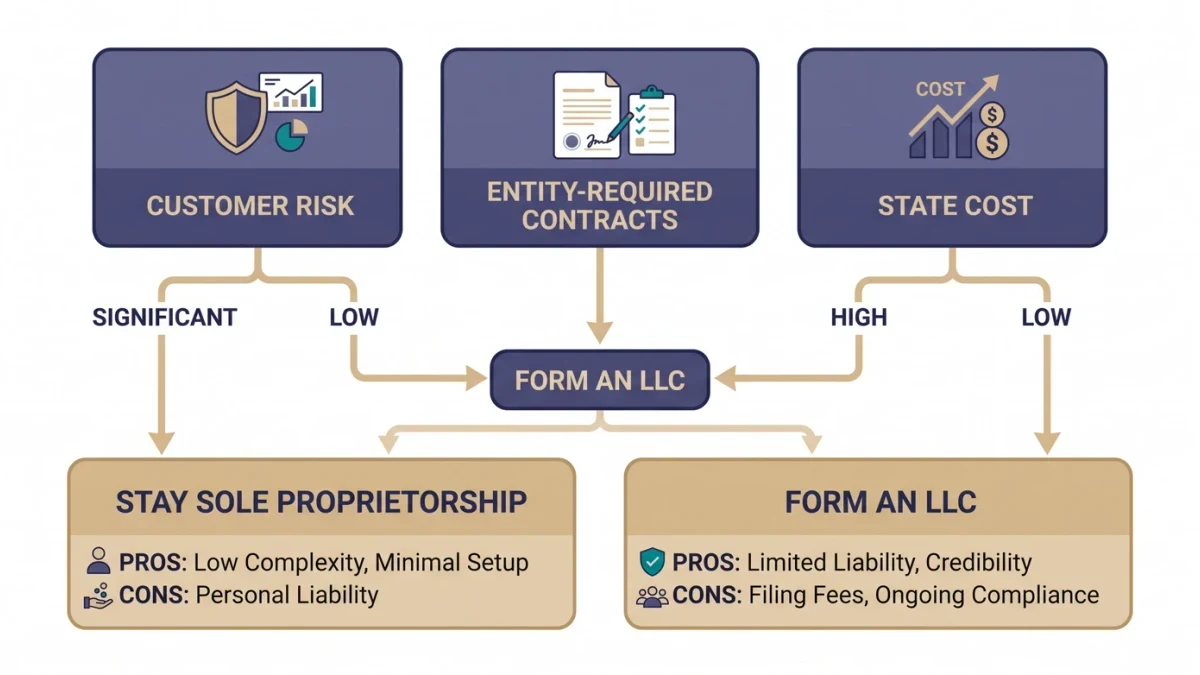
Before giving notice, founders who transition smoothly tend to complete a short, unglamorous list. They register the business entity and open a separate bank account if they have not already, so the full-time venture starts with clean books. They verify health insurance options, since employer coverage ends with the job and individual marketplace plans take time to compare. They confirm any non-compete or moonlighting clauses in their employment contract with a qualified attorney. And they set a personal salary rule in advance — for example, paying themselves a fixed amount monthly — to prevent the common failure mode of draining the business account in good months.
When Is Staying Part-Time the Right Answer?
Some businesses are permanently better as side businesses, and recognizing that is a success, not a retreat. If revenue has plateaued for a year, if the market is genuinely weekend-scale, or if the founder's enjoyment depends on scarcity, keeping the salary and the side income together can be the optimal long-term structure. The full-time leap pays off when untapped demand exists; without it, extra hours mostly add costs. An honest plateau read after twelve months of data beats an indefinite maybe.
The lesson: the right time to go full time is when the data removes most of the risk — income trend, cash reserve, and verified demand — so the leap is a step, not a gamble.