A franchise buys a working system; an independent business keeps every decision. That trade sits at one of the most common forks on a founder's road. The Federal Trade Commission has turned it into paperwork. Its Franchise Rule, 16 CFR Part 436, governs what a franchisor must show before any founder signs.
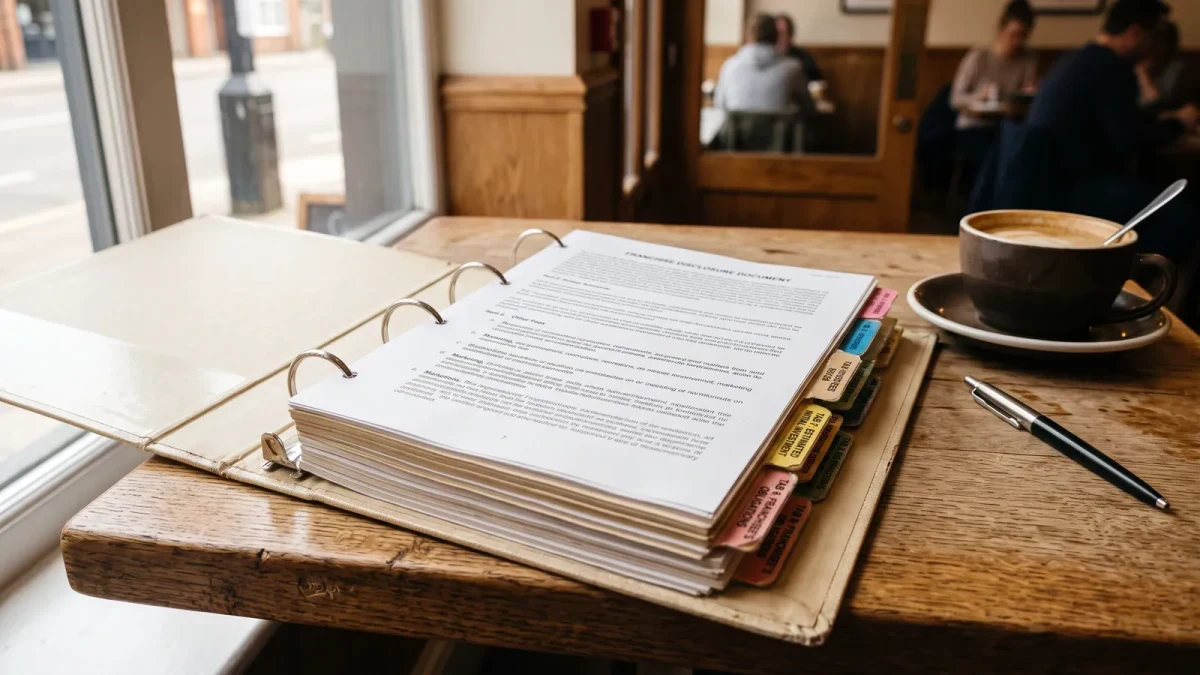
The rule obliges franchisors to hand over a disclosure document with 23 numbered items. Delivery must come at least 14 calendar days before a founder signs or pays, per the rule's text. The document lists initial fees, court cases, bankruptcies, supplier limits, and any earnings claims. An independent founder produces no such file and inherits every line of it as a decision instead.
What Does the FTC Franchise Rule Actually Require?
Franchisors must give buyers a 23-item disclosure document before the sale. The rule also bans unilateral, material changes to a signed franchise agreement, per the regulation's text in the Code of Federal Regulations. It is a disclosure law, not a rating. The FTC vets the paperwork, not the business behind it.
Two items carry most of the cost story. Item 5 covers initial fees, including whether they are refundable, per the eCFR text. Item 19 covers earnings claims: a franchisor may share actual or potential earnings only with a reasonable basis for the figures, the regulation states. Outlet counts, contracts, and financial statements fill the other items.
What Does a Franchise Cost Before It Opens?
Per the FTC's guide to buying a franchise, costs arrive in streams. The initial franchise fee typically ranges from tens of thousands of dollars to several hundred thousand and may be non-refundable. Royalties follow, set as a share of weekly or monthly gross income. Many systems also add charges into a shared marketing fund.
Build-out, equipment, licenses, and opening inventory sit on top. The guide also flags a possible grand-opening charge. The royalty clock does not pause in a slow month: the guide notes royalty payments typically continue even when an outlet loses money. A founder who leaves early may still owe royalties for the rest of the term, per the guide.
What Does an Independent Founder Give Up and Keep?
An independent founder keeps pricing, product, hours, suppliers, and the full margin the brand eventually earns. The founder also builds the brand alone. There is no franchisor name, no operating manual, and no network of peers who have run the same playbook in the same market. Site choice and system design come out of the founder's own budget. This connects to our earlier piece, How to Get Your First 100 Customers Without an Ad Budget.
The FTC guide catalogs the controls franchisees trade away for that system: site approval, design standards, limited sales territory, required suppliers, and set hours or bookkeeping. Menu changes at a restaurant franchise may be off-limits, the guide says. An independent owner makes those calls alone, and absorbs the outcome alone. Readers following this should also see What Buying a Franchise Actually Costs.
Which Model Fits Which Founder?
Fit depends on what a founder wants to own. No federal dataset ranks one model above the other. The FTC frames the choice as an investigation, not a prediction. Three patterns still hold.
- 1. A franchise fits a founder who wants a tested operating system, can fund the fee and ongoing royalties, and accepts the controls spelled out in the disclosure document.
- 2. An independent business fits a founder with a distinct concept, the patience to build recognition from zero, and a preference for full control of pricing, suppliers, and pace.
- 3. Both roads carry the same duties after launch, from taxes to licenses to labor rules. The franchise route adds one duty before launch: read all 23 items, then weigh the fee and the royalty against what a solo launch would cost.
Conclusion: The Document Is the Difference
The Franchise Rule turns a franchisor's pitch into a file a founder can check line by line. The fee-and-royalty column is where the trade becomes visible. Whether the check ends in a signature or in a solo launch, the founder who reads first pays less for the lesson.